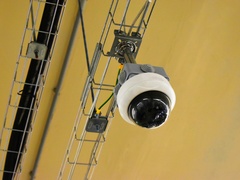
AI video analytics has been one of the most aggressively marketed technologies in the physical security industry for the past five years. We cut through the vendor noise with a frank, field-tested assessment of what's genuinely delivering security value in 2026 — and what remains more promise than performance.
The State of the Market
The AI video analytics market has matured considerably since its early hype cycle, but it remains one of the most uneven technology categories in physical security. Vendor claims range from the genuinely impressive to the outright misleading, and procurement teams — often without deep technical expertise — are routinely oversold capabilities that don't survive contact with real-world deployment conditions.
The result is a landscape littered with expensive systems that underperform against their specification sheets, generate unmanageable false-positive rates, and create alert fatigue that ultimately renders them less useful than basic motion detection. But the technology is also genuinely advancing, and several capability categories have crossed the threshold from experimental to operationally reliable.
This assessment is based on independent evaluation across more than 40 client deployments over the past 18 months, spanning commercial real estate, healthcare, industrial, and government-adjacent facilities. We have no vendor relationships that influence these findings.
"Most facilities don't fail at AI analytics because the technology doesn't work. They fail because they deploy enterprise-grade analytics on consumer-grade camera infrastructure, in lighting conditions the algorithms were never trained on, without the monitoring resources to act on what the system surfaces."
What Actually Works
Based on field performance across varied deployment environments, the following capability categories are delivering reliable, operationally useful results in 2026:
Loitering & Perimeter Dwell Detection
This is the category that has most reliably delivered on its promise. Loitering detection — identifying individuals remaining in a defined zone beyond a configured time threshold — has matured to the point where false positive rates are manageable in most outdoor environments with adequate lighting. When paired with defined response protocols, it provides genuine early-warning value at perimeter boundaries and loading dock areas.
Line Crossing & Zone Intrusion
Virtual tripwires and restricted zone monitoring have proven reliable in controlled interior environments. Server rooms, executive areas, and utility spaces with stable lighting and low ambient traffic are ideal use cases. Performance degrades in high-traffic areas where the algorithm struggles to distinguish authorized from unauthorized crossings without additional context.
Vehicle Detection & Classification
Vehicle analytics — including license plate recognition (LPR), vehicle type classification, and direction-of-travel detection — have reached a level of reliability that makes them genuinely useful for access control integration. Modern LPR systems operating in adequate lighting conditions routinely achieve 97%+ read accuracy, and integration with access control platforms allows for frictionless vehicle credentialing at secured lots and gate facilities.
Crowd Density & Occupancy Monitoring
Post-pandemic, crowd density analytics have seen significant investment and the accuracy has followed. For facilities managing occupancy thresholds — retail, healthcare waiting areas, transit — these tools provide reliable real-time data that integrates well with building management systems.
What Doesn't Work — Yet
The following categories are still generating more marketing interest than operational value in most real-world deployments:
Behavioral Threat Detection
The idea of an AI system that can identify a potential threat based on body language, movement patterns, or behavioral cues remains largely aspirational. The false positive rates in real-world environments are still too high for most facilities to operationalize without overwhelming their monitoring teams. Several high-profile airport and transit deployments have been quietly scaled back for exactly this reason.
Facial Recognition at Scale
Facial recognition in controlled, high-quality camera conditions — a single access point with a cooperative subject — is reliable. Facial recognition in crowded, variable-lighting public or semi-public spaces remains accuracy-challenged, particularly across diverse demographic populations. Beyond the technical limitations, the regulatory environment is tightening rapidly, with several states now imposing significant restrictions on commercial facial recognition use.
Emotion & Stress Detection
Despite active marketing from several vendors, emotion detection technology — purporting to identify stress, aggression, or deceptive intent from facial micro-expressions — has no scientifically validated foundation for security applications. We recommend avoiding this category entirely, both for its lack of reliability and the significant legal exposure it creates.
Technology Maturity Ratings
Based on our field assessment across 40+ deployments, here is our current maturity rating for each major analytics category on a 10-point scale:
Prerequisites for Successful Deployment
The single most reliable predictor of AI analytics deployment success is camera infrastructure quality — not the analytics platform itself. Organizations that deploy sophisticated analytics on aging, low-resolution, or poorly positioned cameras routinely experience poor results and blame the AI when the fundamental problem is the input data.
- Minimum 1080p resolution at all analytical camera positions
- Consistent, adequate lighting — analytics trained on daylight will underperform in mixed or low-light conditions without IR supplementation
- Camera positioning designed for analytics, not just human viewing — angles, heights, and coverage zones differ
- Sufficient processing power — on-camera edge processing or dedicated server capacity appropriate for the analytics workload
- Defined response protocols — analytics without documented response workflows generate alerts that go nowhere
- Ongoing tuning and calibration — AI systems require environmental calibration post-installation and periodic re-tuning as conditions change
Evaluating Vendor Claims
When evaluating AI analytics vendors, apply a healthy skepticism to any claim that is not supported by independent testing data. The following questions should be non-negotiable in any vendor evaluation:
- What is the documented false positive rate in environments similar to ours, at our camera resolution?
- Has the system been independently validated, or only tested in the vendor's controlled lab environment?
- What are the minimum camera specifications required to achieve the published accuracy rates?
- How does accuracy degrade at night, in rain, or in high-traffic conditions?
- What is the ongoing tuning and maintenance requirement post-deployment?
- What is the data retention and privacy posture for analytics metadata?
AI video analytics is no longer a future technology — but it is still a technology that requires expert specification, proper infrastructure, and realistic expectations. The facilities that get the most from these systems are those that deployed with clearly defined use cases, invested in camera infrastructure first, and engaged independent expertise to evaluate vendor claims before signing contracts.
Looking Ahead
The next 24 months will see meaningful advances in multi-sensor fusion — combining video analytics with access control events, alarm data, and environmental sensors to provide contextual threat assessment that no single system can achieve alone. Early deployments of these integrated platforms are showing genuine promise, and we expect this to be the dominant analytics story by 2028.
For facilities currently evaluating or re-evaluating their video analytics strategy, the guidance is straightforward: invest in infrastructure, deploy proven capability categories first, and treat any vendor claiming behavioral prediction or autonomous threat response as one requiring extraordinary scrutiny.